I am often surprised when meeting and talking to people that they will say, “I like/love/enjoy” the environment, but then, in the next sentence, tell you about their work, or recreation that damages the environment, and their voting behaviour that supports parties and policies that will degrade the environment further. They seem oblivious to this disconnect, and, in most cases, I am sure that their affection for the natural world is sincere.

I am not sure what is going on here beyond the very superficial observations of a lack of thought or awareness of consequences of behaviour, and the success of all manner of displacement exercises promulgated by the dominant paradigm. There is also the clear adoption of the hierarchy and context of the Growth religion which moves ‘the environment’ to the margins and renders it a small indulgence, if and when the proper business of life has been taken care of.
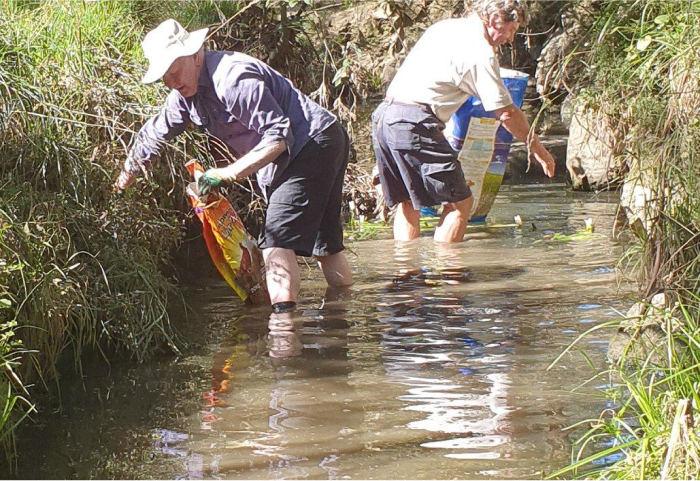
Despite this lopsided view of life, what we do in our day-to-day lives can have great impact. We may be lucky enough to have acquired the skills and had the opportunity to work for the benefit of the environment and many people have done this, for example David Attenborough (see 1.5.7), or artist Celia Rosser (1.7.8), or scientist and naturalist Vincent Serventy (1.5.5), or Australian politician Bob Brown. They have devoted their working lives to the environment, and accompanying them are thousands of people, lesser known, picking up rubbish along an urban creek, writing to their local council, working to make their workplace more environmentally aware, and protesting against an array of damaging activities. Section Four divides up these actions into three groups – Work (4.2 & 4.3), Volunteering (4.4), and Action (4.6, 4.7, & 4.8, e.g. voting, protesting, etc…), and also presents an insightful article by Jack Harich (4.5) that suggests a systems approach to these activities and clarifies the steps and processes that environmentalists take, as well as the barriers they must surmount.