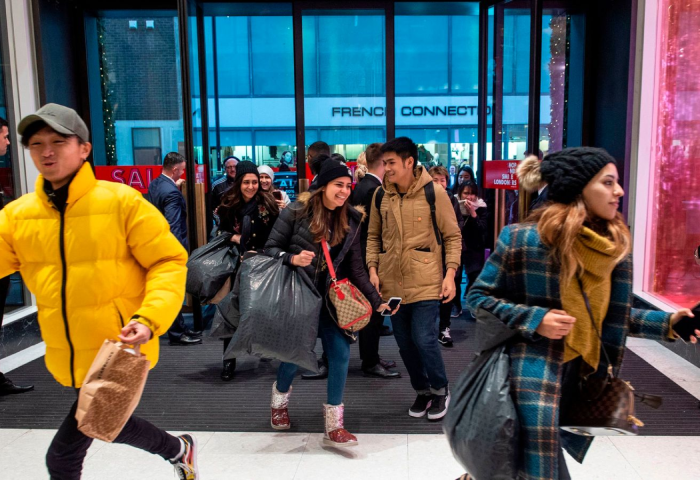
Where to start? The Developing World can’t get enough of them and the Developed World is drowning in them. Our Footprint Analysis in 2.1 tells us that they comprise 14% of our personal consumption impact1, ranking just behind transportation. Again, this is largely a First World problem and I am aghast at the seemingly unstoppable momentum of our consumption of goods. There seems to be no ‘off’ button to our desires, and when this is married to the evil twins of overconsumption – advertising and fashion – then the average First World person seems to go into a daze of mechanical consumption without beginning or end. Everything from shoes to kitchens, to food processors, to gardens, must be consumed and then thrown out as new products appear with ever-increasing rapidity. I watched in horror, the other day, the last episode of Monty Don’s excellent television series on garden history in the UK2 – https://www.imdb.com/title/tt11640272/ – when he visited a massive industrial farm producing plants for supermarkets. Under hectares of glass and plastic, and ringed by conveyor belts, plants were being mass-produced in the hundreds of thousands and sold as cheaply as possible. There’s nothing wrong with this at face value, but these plants, as we all know, are basically thrown away by their purchasers after their flowers die, and, as if to prove the point of their ephemeral life, were being sprayed with glue and glitter to make them shine before going onto the shelves!

The Story of Stuff’ is a splendid introduction to the topic – youtube video 21 mins . To pick but one good of the thousands in our privileged lives in the First World, extensive research has been carried out on the environmental and social impacts of garment manufacture, for example, the humble T-shirt. A good introductory video has been produced by Angel Chang for Ted Ed and can be viewed here (6 mins):

https://ed.ted.com/lessons/the-life-cycle-of-a-t-shirt-angel-chang
The video follows a lifecycle approach whereby all stages of production and marketing and use are followed, and this can be presented graphically as:

The environmental impacts are many and varied (detailed analysis can be viewed here: PowerPoint Presentation (openlca.org) ), but are, in simple summary for one t-shirt(ibid):
- 22 lbs fertilizers (9.8 kgs)
- .01 lbs pesticides (5 gm)
- 2 lbs fossil fuels (544 gm)
- 700 gallons water (3,182 lt)
- 73 lbs CO2 (2.6 kgs)
The Life Cycle of a T Shirt | (wordpress.com) .
While some of these amounts appear small, it must be remembered that two billion t-shirts are sold each year4, and as Angel Chang informs us, 80 billion garments! Many of these are being sold at ridiculously low prices – a few Australian dollars at some of my country’s stores – and the average ‘wear’ of all clothing is down to 14 times5, (and would be much less for these cheap items – https://www.ethicalconsumer.org/fashion-clothing/what-fast-fashion-why-it-problem ). Almost none of this is recycled, or re-used, so there is clearly something very wrong attitudinally, and economically, here. The attitudinal aspects will be explored in Section 3, and economic structures and weaknesses in Section 9, but it is clear that the classic tactic and problem of ‘externalities’ is in play here whereby social and environmental costs are removed from the accounting, making the T-shirts so cheap that using raw materials and creating and shipping a new product is ‘cheaper’ than re-use/recycling. A pea and thimble trick.
Reduce/Repair/Make/Re-use/Recycle

Elizabethans of the 17th century knew the value of goods and the desirability of keeping them, even across generations. Famously, William Shakespeare, on his death in 1616, left to his wife Anne Hathaway his “second best bed”. (In today’s world this seems like a mean snub, but then it was a true reflection of value and would have referred to the marital bed rather than the first, ‘show’ bed, for visitors). What a contrast with today where beds and mattresses dot our Nature strips and landfills, changed as often as fashion and desire dictates!
As indicated, this compulsive consumption, almost without meaning and pleasure, will be addressed in Section 3, but it can be noted here that it is possible, indeed has been possible and the standard way of life for human beings for 99% of history, to adopt another attitude; one of quality, not quantity, of pleasure and meaning in making, repairing, re-using and keeping goods, rather than the pointless pursuit of the eternal ‘new’. The coronavirus pandemic kept people out of shopping centres and city centres and confined them to the home and immediate surrounds, and with this came an upsurge in interest in making and doing things for oneself. Knitting, sewing, baking, carving, food production, etc. and so forth, all were ‘re-discovered’, and I have lost count of the number of people who have told me how much they enjoyed them. To assist the process, some places are lucky enough to have groups or centres sharing skills and materials; for instance, the excellent Recreate Centre at Mt Pleasant which offers workshops, materials and community in the Adelaide Hills in South Australia (https://www.facebook.com/recreatecommunity).


In addition, there are many old and new sharing opportunities obviating the need for new purchases: libraries for books, toys and tools exist, as do various forms of trade and swapping through local markets and centres.

It is encouraging, too, that more and more landfills are operating so-called ‘tip shops’, where items are removed from the waste stream and sold or exchanged, such as at Denmark, south-west Western Australia.

When, finally, an item cannot be re-used or repaired, it should be able to be recycled (for more thorough examination of this topic, see Section 10 ‘Wastes’), and there are innovative centres like Transmutation at Robe, in South Australia – Transmutation – Reduce, Reuse, Recycle – where everything from canvas to car tyres, to plastic bread-bag ties, is recycled into new items, like shoes, bowls, doorknobs and pens.

(Ways to reduce consumption of goods – clothing – is explored further on webpage 3.7).
1WWF. 2020. Living Planet Report 2020 – bending the curve of biodiversity loss. WWF, Gland, Switzerland.
2 Don, M. 2015. The Secret History of the British Garden. BBC, London, UK.
3 Buddha Jeans, K. 2014. The Life Cycle of the T-Shirt. Evergreen Design Co. The Life Cycle of a T Shirt | (wordpress.com)
4 Matthias, W. 2012. “T-Shirt Blues: The Environmental Impact of a T-Shirt”. HuffPost. July 3rd.
5 Crumbie, A. 2021. What is Fast Fashion and Why is it a Problem. Ethical Consumer. https://www.ethicalconsumer.org/fashion-clothing/what-fast-fashion-why-it-problem